Roof Ventilation Problems in Lochaven of Noblesville: Technical Guide
A Lochaven of Noblesville homeowner called us last August after her second floor bedrooms hit 88 degrees with the AC running full blast. She assumed her air conditioner was failing. What we found in her attic told a different story. The temperature up there was 147 degrees, her soffit vents were painted shut from a siding job eight years earlier, and the ridge vent installed during her last reroof had been covered by underlayment that was never trimmed back. Her shingles looked fine from the curb, but the underside of the roof deck was already showing early signs of delamination. That house is the rule, not the exception, across central Indiana.
Roof ventilation is the quietest part of your roofing system and usually the most misunderstood. When it works, you never think about it. When it fails, the damage shows up in your energy bill, your comfort, your shingle life, and eventually your plywood. Lochaven of Noblesville Metal Roofing has been inspecting attics across Indianapolis and the surrounding suburbs since 2018, and a surprising percentage of the premature roof failures we document trace back to airflow problems rather than storms or age. If your roof does not need replacement, we will tell you. But if the venting is the real issue, fixing only the shingles is money thrown away.
Step by-Step Ventilation Diagnostic Procedure
- Calculate required Net Free Area (NFA). Measure your attic floor in square feet. Divide by 150 for the baseline IRC requirement, or by 300 if you have a Class I or II vapor retarder and balanced venting. A 2,000 sq ft attic needs roughly 1,920 square inches of NFA at 1:150, split evenly between intake and exhaust.
- Split the total 50/50. Intake should equal exhaust, plus or minus 10 percent. If exhaust exceeds intake, the system pulls conditioned air from the living space through ceiling penetrations. In a 2,000 sq ft example, target 960 sq in intake and 960 sq in exhaust.
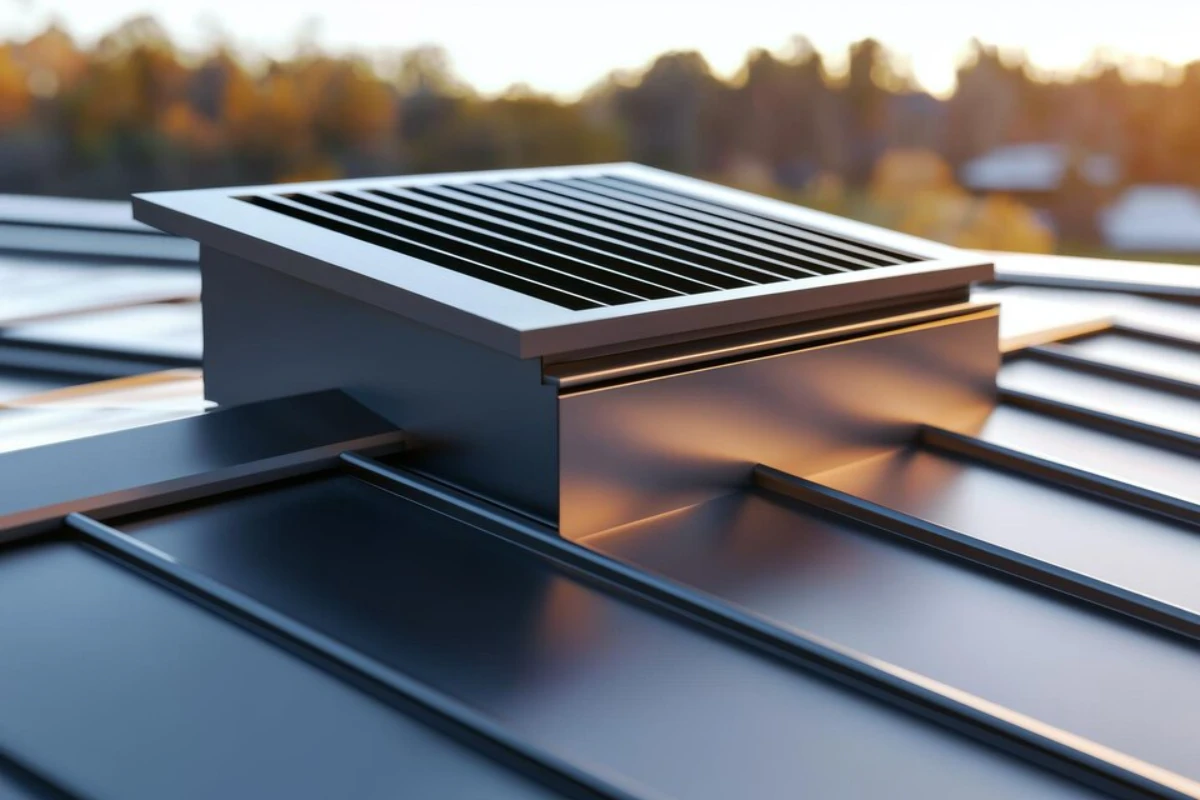
- Identify the exhaust type. Walk the exterior and catalog every exhaust vent: ridge vent, box vents (750 or 960), power fans, turbines, or gable vents. Write down quantity and NFA rating per unit. Most ridge vent products provide 12 to 18 sq in per linear foot.
- Check for mixed exhaust. Only one exhaust type should be active per attic zone. Ridge vent combined with gable vents or box vents causes short circuiting, where air enters the nearest exhaust instead of the soffit. Gable vents should be sealed with rigid foam and foil tape when a ridge vent is installed.
- Inspect soffit intake from below. Look up at every soffit panel. Count perforated or vented panels versus solid panels. A continuous 2-inch vented strip along a 40 foot eave provides roughly 576 sq in of NFA, but only if the panels are not painted shut or blocked.
- Verify intake from the attic side. Enter the attic with a flashlight. At each eave, confirm you can see daylight through the soffit. Insulation baffles (rafter vents) should extend from the top plate up past the insulation line, maintaining a minimum 1-inch air channel.
- Measure attic temperature delta. On a 90 degree summer day, a properly vented attic should run 10 to 20 degrees above ambient. Readings of 130 to 160 degrees indicate failed ventilation. Use an infrared thermometer aimed at the underside of the decking at noon.
- Check decking moisture content. A pin type moisture meter should read 8 to 14 percent on OSB or plywood sheathing. Readings above 19 percent indicate chronic condensation and risk of delamination. Black staining on nail shanks is a visual confirmation.
- Locate bypass points. Scan for bath fans, kitchen fans, and dryer vents terminating inside the attic. Every one must discharge through the roof or wall to the exterior. Seal can lights, top plates, and plumbing stacks with fire rated foam or caulk rated to 250 degrees.
- Document and photograph. Record NFA values, temperature readings, and moisture meter results. This baseline supports warranty claims and insurance documentation if storm damage later complicates the system.
Re-Inspection Interval
- Six months after correction, pull attic readings during the opposite season from the initial repair to confirm year round performance.
- Annually, inspect soffit panels from the ground for paint bridging, wasp nests, or bird blockage at the perforations.
- After any roof work by another trade (solar, satellite, antenna), re verify ridge slot continuity and baffle integrity.
- Every five years, spot check decking moisture at four corners and the center of the attic.
If your system fails three or more verification points, the correction typically requires partial shingle work at the ridge and eaves. In severe cases with delaminated decking, a full roof replacement becomes the economical choice because the deck repairs, ventilation retrofit, and new underlayment cost nearly as much as a complete system when performed separately. Lochaven of Noblesville Metal Roofing documents every measurement during the diagnostic visit so the decision between targeted repair and full replacement is driven by recorded values, not guesswork.
Getting an Honest Answer About Your Attic
Ventilation problems hide in plain sight, and most roofers never bother to look past the shingles. If your Lochaven of Noblesville home feels hotter upstairs than it should, your energy bills keep climbing, or you have noticed any of the warning signs above, the next step is getting eyes on the attic, not just the roof. Lochaven of Noblesville Metal Roofing is BBB A+ accredited, Owens Corning Preferred, and Malarkey Certified, and we have been diagnosing central Indiana attics since 2018. Schedule a no pressure inspection and we will show you photos of what we find, explain what is causing it, and lay out your options in plain language. If the venting is the real issue, fixing only the shingles is money wasted, and we would rather tell you that now than after another summer.
Common Failure Patterns in Lochaven of Noblesville Attics
- Painted soffit perforations. Exterior repaints frequently bridge the small holes in vented aluminum soffit, cutting intake NFA by 30 to 70 percent. Inspect with a flashlight from inside the attic. If daylight is not visible through the perforations, the panels must be replaced or drilled out.
- Compressed insulation at the eave. Blown in cellulose or fiberglass often slumps over the top plate and blocks the intake path. Install rafter baffles in every bay, not just visible ones. A single blocked bay can starve a 4 foot section of ridge vent.
- Undersized or missing baffles. Foam baffles rated at 1-inch clearance work for standard 2x8 rafters. Deeper energy heel trusses require 2-inch baffles or site built chutes to preserve airflow above R-49 or R-60 insulation depths.
- Gable vents left open after ridge retrofit. Crews sometimes install a ridge vent without returning to seal the gables. The Lochaven of Noblesville Metal Roofing installation protocol requires both actions in the same work order to prevent short circuiting.
- Cathedral ceiling dead zones. Vaulted sections without a continuous vent channel from soffit to ridge develop isolated moisture pockets. Each rafter bay must vent independently since there is no shared attic volume.
Verification Checklist After Repair
- Attic temperature within 20 degrees of ambient on a hot afternoon
- Sheathing moisture under 15 percent during winter months
- No frost on nail tips in January
- No ice damming at eaves after snow events (see our notes on winter ice dam prevention for tie in)
- Shingle surface temperature under 160 degrees at noon in July (referenced against summer roof heat damage thresholds)
- No condensation dripping from roofing nails into insulation
- Smoke pencil test at soffit shows inward draw of 30 to 60 feet per minute on a mild day
- Ridge vent external baffle intact and not crushed by ladder or foot traffic
Correction Sequence by Failure Mode
- Intake starved system (most common in Lochaven of Noblesville). Add continuous soffit vents or install smart vents at the eave edge. Retrofit rafter baffles in every bay. Target restoring full 960 sq in intake before touching exhaust.
- Mixed exhaust. Seal gable vents from the interior using 2-inch rigid foam cut to fit, sealed with foil tape. Remove or cap unused box vents. Leave one exhaust type per zone.
- Undersized ridge vent. Verify the slot width is 1.5 to 2 inches on each side of the ridge board. Slots cut at 1 inch or less drop airflow by 40 to 60 percent. Recutting requires shingle removal along the ridge.
- Power fan cycling against ridge. Disconnect electric attic fans that share a zone with ridge or gable venting. They pull from the nearest opening, not the soffit.
- Humidity source inside attic. Extend bath fan ducts with insulated flex to a dedicated roof cap. Use 4-inch minimum duct, with runs under 25 feet and slope toward the exterior.
- Deck delamination at ridge. Sheathing soft to the touch within 24 inches of the ridge requires cut out and replacement with matching thickness OSB or plywood. Do not sister new material over rotted decking, since fasteners will not hold warranty pullout values.
Specifications Reference
- Minimum NFA ratio: 1:150 attic floor square footage
- Balanced ratio with vapor retarder: 1:300
- Intake to exhaust balance: 50/50 plus or minus 10 percent
- Ridge vent slot width: 1.5 to 2 inches total
- Rafter baffle air channel: 1 inch minimum
- Bath fan duct diameter: 4 inches minimum
- Bath fan duct length: 25 feet maximum for 4-inch
- Acceptable decking moisture: 8 to 14 percent
- Acceptable summer attic delta: 10 to 20 degrees above ambient
- Minimum rafter baffle depth for R-49: 2 inches
- Fire rated foam seal temperature rating: 250 degrees minimum
- Ridge vent NFA per linear foot: 12 to 18 sq in typical
- Continuous soffit vent NFA per linear foot: 9 to 14 sq in typical
Frequently Asked Questions
How do I know if my Lochaven of Noblesville attic has enough ventilation?
The building code target is 1 square foot of net free vent area for every 150 square feet of attic floor, split roughly evenly between intake at the soffits and exhaust near the peak. Lochaven of Noblesville Metal Roofing measures this directly during a free inspection rather than estimating from the outside.
Can I just add a powered attic fan to fix hot air?
Usually no. In most Lochaven of Noblesville homes, powered fans pull air from the path of least resistance, which is often the conditioned house itself rather than the soffits. That raises cooling bills and can worsen moisture. Passive balance almost always works better.
Does homeowners insurance cover ventilation damage?
Gradual damage from poor ventilation is not covered, but sudden storm damage to vents themselves often is. If a windstorm tore off a ridge cap or cracked a box vent, Lochaven of Noblesville Metal Roofing can help document it for a claim.
Will better ventilation actually lower my energy bills?
In central Indiana homes we have serviced, proper intake and exhaust combined with air sealing typically reduces summer cooling loads by 8 to 15 percent and cuts winter ice dam risk substantially. Results depend on insulation levels too.
How long does a ventilation correction take?
Most fixes we perform on Lochaven of Noblesville homes wrap up in a single day, including adding baffles, rerouting a bath fan, or rebalancing exhaust. Larger projects involving vaulted ceilings or extensive air sealing can take two to three days.
Have a metal roofing question?
Our manufacturer-certified Lochaven of Noblesville crew is ready to help. Free comprehensive inspections, written scopes, no pressure.